Continuous integration
After the migration, the systems stay current
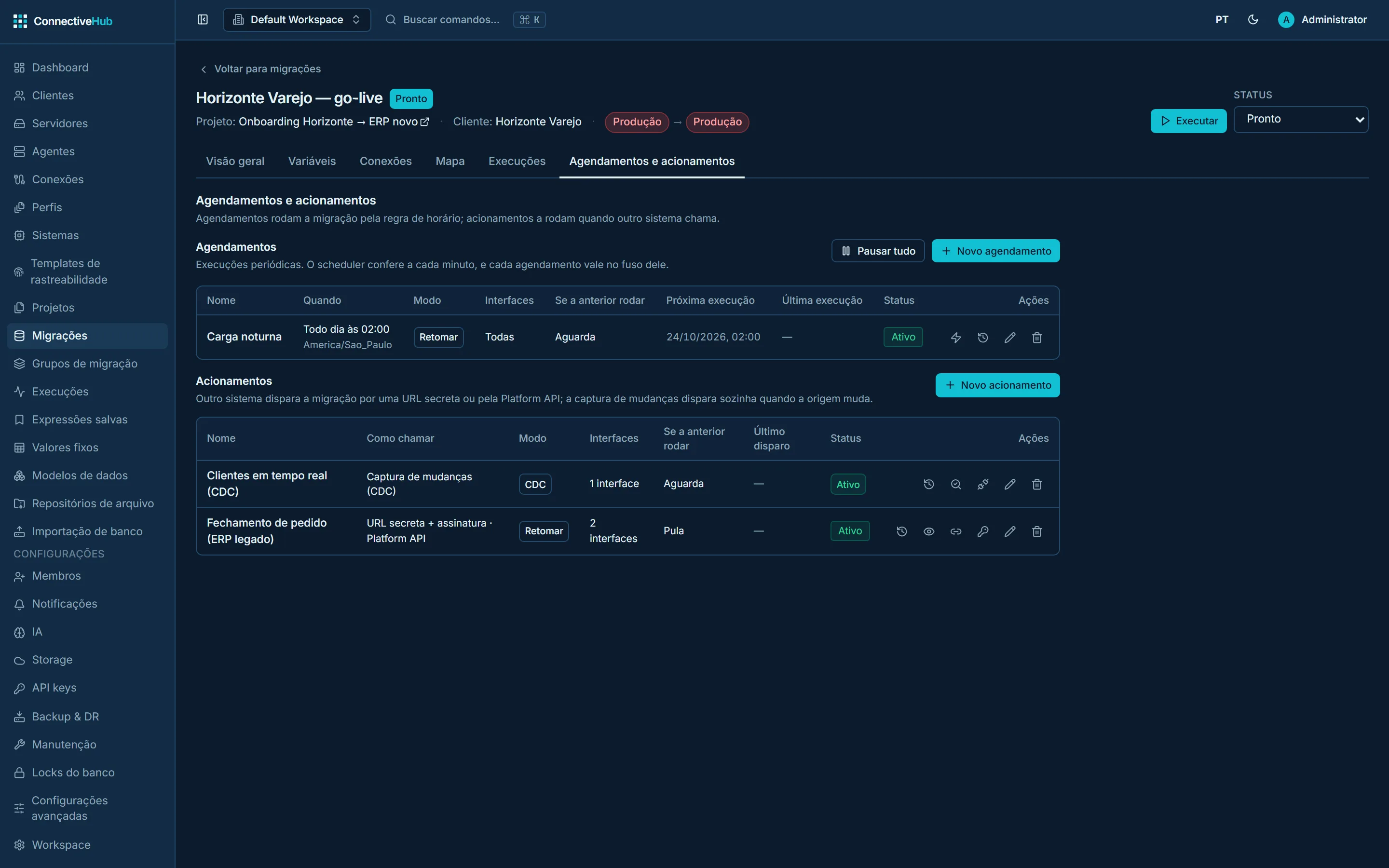
Change data capture (CDC) from Postgres, Oracle and MySQL applies at the destination, by key, what changed at the source — no Kafka, no GoldenGate, no per-processor license.
The problem
“After cutover both systems coexist for months. CDC costs a per-processor license or a cluster to operate.”
- CDC tools licensed per processor, in dollars.
- A messaging cluster to maintain just for this.
- Scheduled integrations that re-read everything every time.
How we solve it
-
Three databases, each one’s own log
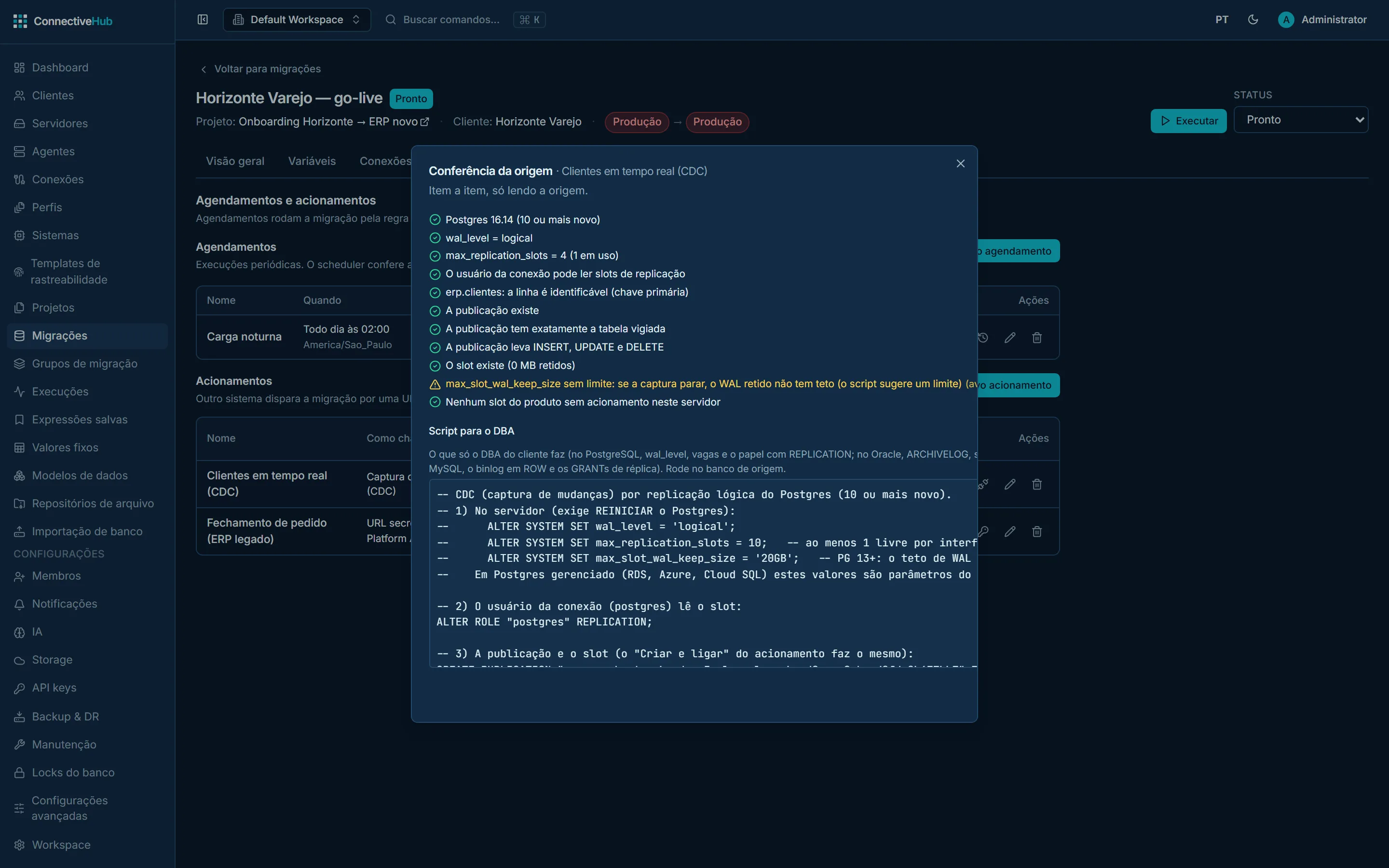
Postgres through the logical replication slot; Oracle through LogMiner, with no GoldenGate and no extra agent; MySQL through the binlog.
-
The check and the DBA script
Before switching on, the check verifies item by item what the database needs — privileges, log settings — and generates the script for the DBA to run.
-
The position only moves after the destination
The log position (LSN, SCN or file and position) only moves forward once the destination confirmed the range. A crash midway: the next round repeats the range, applied by key.
-
It pauses when the schema changes
A dropped column in the watched table, a TRUNCATE or a lost slot pause the capture with the reason, instead of writing wrong data.
-
Schedules, webhooks and API
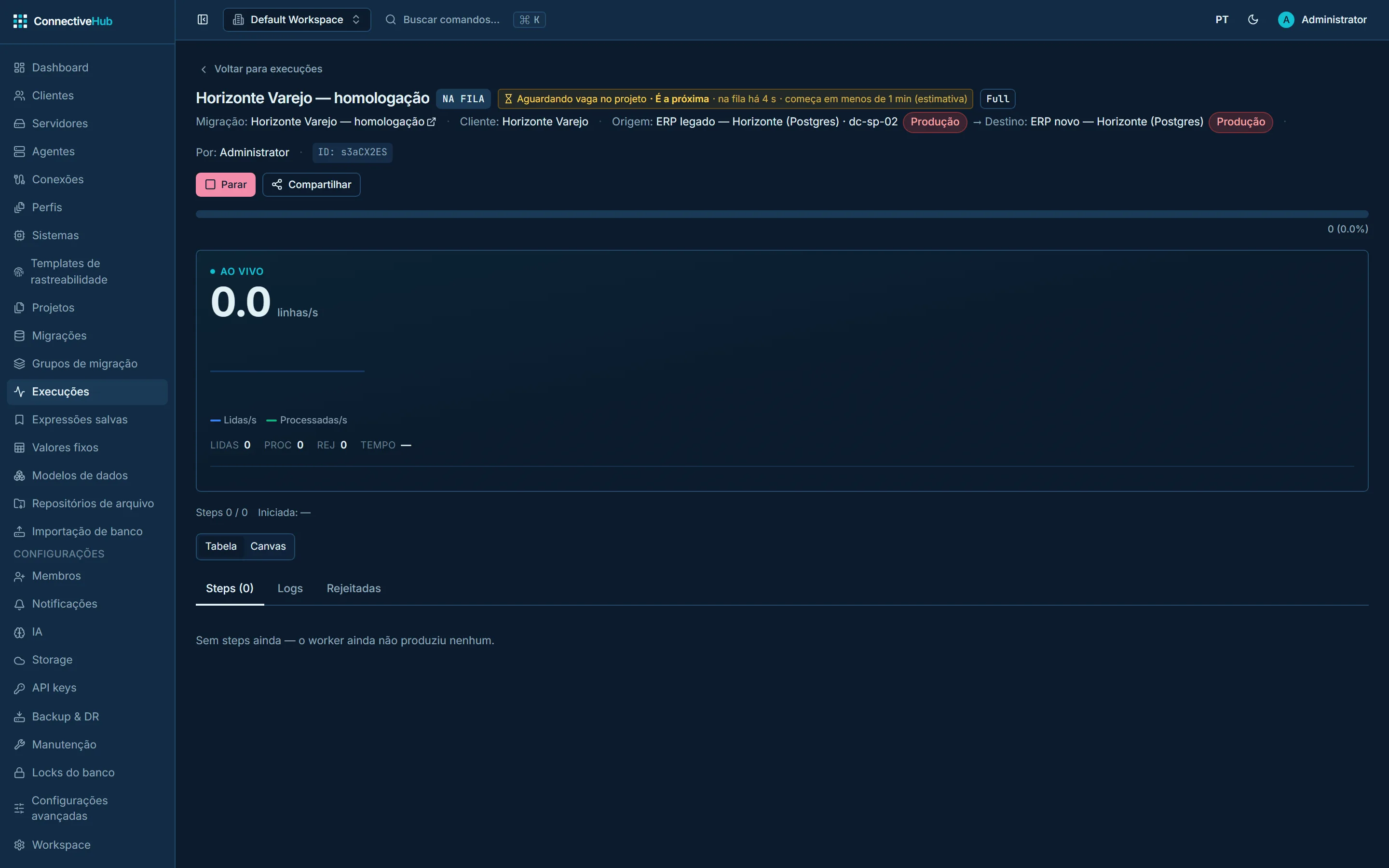
Besides CDC, a run fires on a schedule (with time zone and exceptions), from a webhook with an HMAC signature or from the Platform API — with a cap on concurrent runs and a queue with a start estimate.
See it working
In numbers
- 4 databases with change data capture: PostgreSQL, Oracle and MySQL
- 3 ways to fire besides CDC: schedule, webhook and API
Want to see this in your scenario?
In a demo we walk through the flow with a case like yours, from the agent to reconciliation.